
Why a Progressive Web App Often Beats a Native App First in India
A practical guide to choosing a PWA over a native app first for Indian businesses, with cost, audience, and technical trade‑offs laid out.

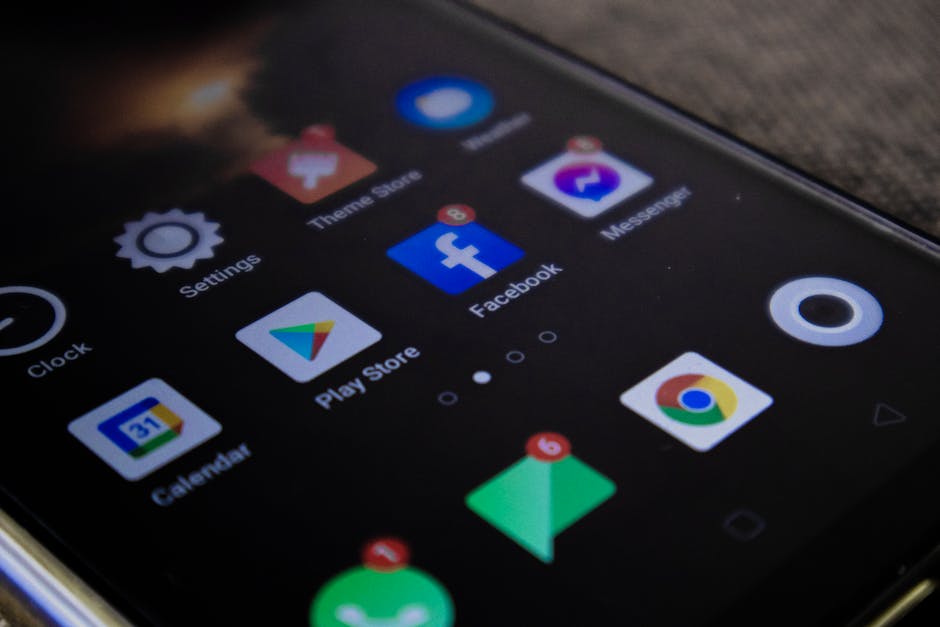
Start with a PWA when you need fast market entry, broad device coverage, and limited budget, then migrate to native only if you hit performance or platform‑specific needs.
When a PWA Makes Sense for an Indian Business
You want to reach customers on low‑end Android phones, in areas with spotty 3G, and you have a modest budget. A progressive web app (PWA) delivers a near‑native feel through the browser, works offline, and can be added to the home screen without going through the Play Store. That alone cuts the onboarding friction dramatically.
PWAs still run inside a browser shell, so you can’t tap into deep OS features like Bluetooth or AR without extra work.
If your core value proposition is content delivery, simple transactions, or a loyalty program, the PWA will satisfy 80‑90 % of user expectations while keeping development costs roughly 40‑60 % of a native counterpart.
Cost Breakdown: PWA vs. Native
Below is an illustrative cost split for a medium‑complexity product (e‑commerce catalog, login, push notifications). Numbers are rounded to give a sense of proportion, not exact rupees.
| Phase | PWA (₹ lakh) | Native (₹ lakh) |
|---|---|---|
| Design | 8 | 10 |
| Development | 20 | 35 |
| QA & Testing | 5 | 8 |
| Deployment | 2 | 4 |
| Maintenance/yr | 6 | 12 |
The PWA column shows roughly half the development effort because you write one codebase for all browsers. Native requires separate Android and iOS streams, each with its own UI guidelines and SDK quirks.
Reach vs. Performance Trade‑off
A PWA loads over HTTPS, caches assets, and can serve users on a 2G connection after the first visit. That’s a huge win in tier‑2 and tier‑3 cities where many still rely on cheap data plans. However, the same PWA will never match the frame‑rate of a game built with Unity for Android, nor will it get the same battery efficiency as a fully native shopping app that pre‑loads images in the background.
The annoying detail most teams forget
Even after a PWA is "installed," the OS may still treat it as a browser tab. On Android, the back button can exit the app unexpectedly if you haven’t handled the navigation stack carefully. On iOS, Safari still imposes a 50 MB storage cap for offline assets, which can bite a media‑heavy catalog.
Timeline Comparison
If you need to launch before the next festive season, a PWA can be ready in 8‑10 weeks, whereas a dual‑native approach often stretches to 16‑20 weeks. The extra time isn’t just coding; it’s the coordination of two separate QA cycles, two app‑store reviews, and two sets of device‑lab testing.
When to Switch to Native
Start with a PWA and monitor two signals:
- Performance bottlenecks – users reporting lag on complex animations or large data syncs.
- Platform‑specific demand – requests for features like fingerprint authentication, NFC payments, or deep integration with Android’s intent system.
If either crosses a threshold (e.g., >15 % drop‑off on checkout), it’s time to invest in a native layer for that platform.
Decision Checklist
- Budget: < ₹ 30 lakh → PWA first.
- Target devices: Majority low‑end Android → PWA.
- Feature set: No heavy graphics, no AR → PWA.
- Time‑to‑market: Need to launch in < 3 months → PWA.
- Future roadmap: Plan to add native‑only features later → start with PWA.
Visual Comparison
Where Development Hours Go
Share of a Typical Build
The Real‑World Path
- Discover – Map user journeys, identify core screens.
- Design – Create responsive layouts that shrink gracefully on 4‑inch screens.
- Build – Use a framework like React‑or‑Vue with a service‑worker for caching.
- Launch – Deploy to a CDN, add a manifest, promote the "Add to Home Screen" prompt.
- Support – Monitor performance, push updates instantly without app‑store approval.
Risks of Skipping the PWA
If you jump straight to native, you may end up with two divergent experiences that diverge over time. Maintaining feature parity becomes a coordination nightmare, especially when your product team is small. Also, you’ll miss out on the instant update capability that PWAs provide – every bug fix can be shipped the moment you push to the server.
The Bottom Line for Indian Managers
You have to balance three constraints: cost, speed, and reach. A PWA satisfies the first two for most consumer‑facing apps and gives you a market‑ready product that works on the cheap Android handsets that dominate the Indian market. Only when you hit clear performance ceilings or need deep OS hooks does a native app become justified.
We usually advise clients to start with a PWA, validate the concept, and then allocate a separate budget for native development if the metrics demand it. This staged approach protects your cash flow and lets you learn from real user behavior before committing to larger engineering effort.
Nexgino has helped several Indian brands follow this path, delivering fast, affordable web experiences before moving to native when the need arose.
Thinking about building something?
Tell us what you have in mind. You will hear back from an engineer, usually within a day.
Start a project